Home›Archive›Democracy & Citizenship›Refugees and Public Services
From the archive · Speech
Refugees and Public Services
Opening a conference at Stratford Town Hall on health and access to services for refugees.
Originally published 7 May 1999
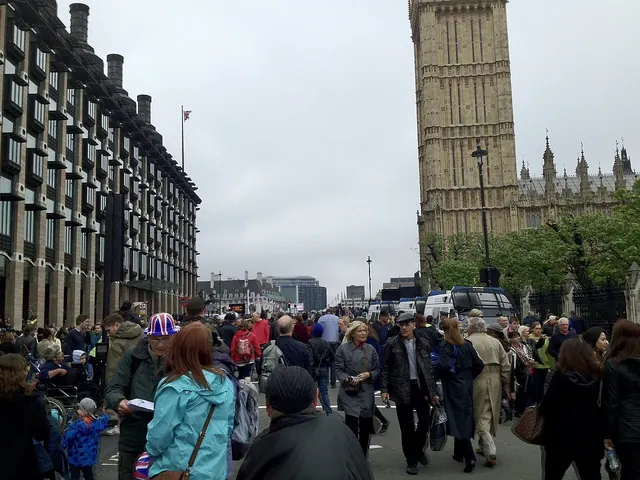
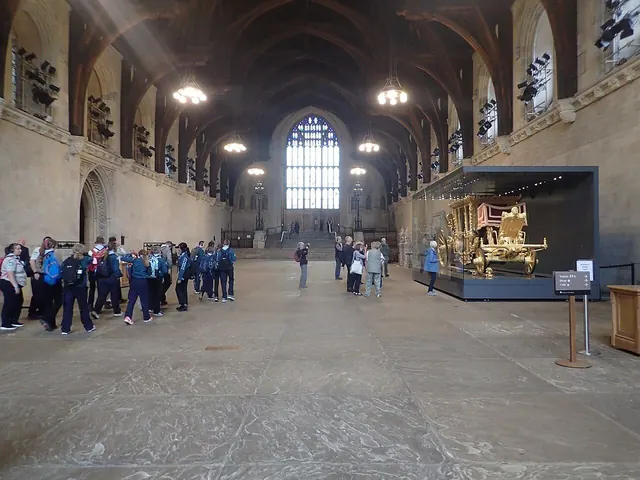
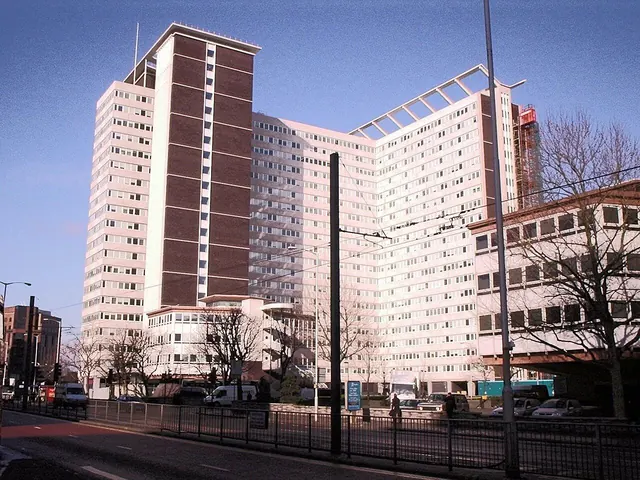
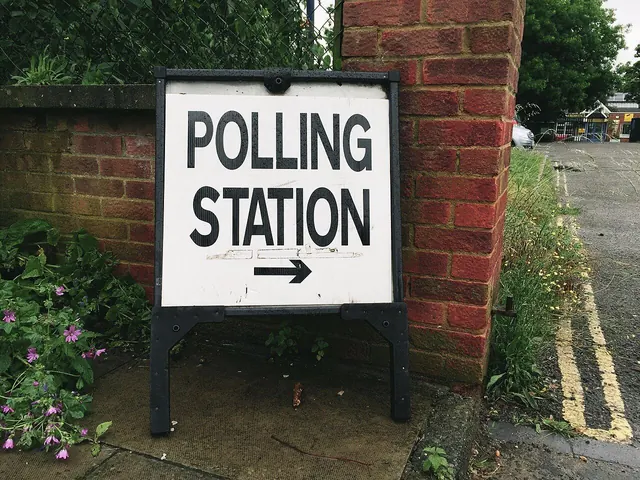
From the archive. Between 1998 and 2003 this domain carried the constituency website of the Member of Parliament for East Ham. This page keeps one of its items as a historical record, with the original date restored. East Ham Ledger, which publishes the site today, is an independent magazine and has no link to any MP, party or Parliament; contact details and the names of private individuals have been removed, and lost pictures have been replaced with credited photographs of the places concerned.

Pictured today: Photo: John Salmon / Wikimedia Commons, CC BY-SA 2.0
Introduction I am very pleased to be here this morning to open this conference. This is an important forum, pooling considerable expertise and knowledge about the needs of refugees and the barriers they all too often face accessing vital services such as health, housing and education. I speak as a Minister at the Department of Social Security which provides some support for asylum seekers, but I know from my surgeries in East Ham that a successful approach requires partnership between all the agencies involved.
Since 1951, Britain's commitment to refugees has been enshrined in international law. The recent events in the former Yugoslavia have highlighted the continuing need for that commitment and I think just perhaps they have helped to build vital public support for the commitment too and we do need that.
I know that many here have been watching with keen interest the progress of the current immigration and asylum bill and that the session which follows this one will consider how that will impact the people you are working with. I would simply make the point that we cannot go on with a system which, as the present one does, all too often informs people years after they have arrived in the UK that they are not supposed to be here. I meet people every week in that position and I am sure you do too, and it cannot be allowed to go on.
Contribution made by refugees There were more than 46,000 applications for asylum in 1998, with the majority of those going on to reside in Greater London. The traumatic circumstances that often precede arrival in the UK compounds the stress of being separated from loved ones and having to deal with cultural barriers. It can come as no surprise that one in six refugees suffers from physical health problems, severe enough to affect their quality of life, and that two thirds have experienced anxiety or depression.
Despite the already considerable pressures on service providers in East London, the services that refugees and asylum seekers receive are of a high standard. I commend the attention to this part of our community which has been given by the health authority and health trusts. For many different reasons people too often don’t access the services and the effect of this exclusion extends beyond the individual concerned to their family and community. It is vital that we correct this situation if we want to continue benefiting from the significant contribution that refugees have made to our communities in the past, and need to make in the future. This is essential if Britain is to become the modern and decent country that the Labour Government is working for.
Modern and Decent We see ourselves as having embarked on a ten year programme to build a new Britain which will be modern and decent. Modern Britain will have a stable economy, beyond our past record of boom and bust. We'll have strong companies, exploiting the know-how, creativity and expertise of the people who live in Britain - including those skills from the often very able and highly motivated people who have fled here from elsewhere. We'll have higher levels of investment in information technology, infrastructure, and skills.
We'll have higher standards at school and be providing high quality opportunities for all our young people. As individuals and collectively, we shall have confidence in the future.
Decent Britain will be an inclusive society where everyone has the chance to play their full part. There will be help for those trapped on benefits or in poor housing or without a job - those unable to work through disability or because they are providing care for a relative - help into work for those who are able to work and security for those who are not. There will be a health service that people can have confidence in.
We shall confront crime, anti-social behaviour and drug taking which cast a shadow over far too many lives. We want to entrench decent values - society pulling together - with rights matched by responsibilities.
Somodern and decent - that’s where we want to be in the years ahead.
At the heart of this vision is of an inclusive society where everyone has the chance to play their full part. I meet many people in my constituency surgeries in East Ham whom the system has let down badly. They are bright, able people but, for whatever reason, too often they have not have been able to access the help which should have been available so that they can move on and fulfil their potential. If they had been able to access that help when they needed it, it would have been to their benefit of course, but also to the benefit of the rest of us as well.
Welfare Reform This idea, that everyone should be able to contribute to society is at the heart of the Government’s reform of the welfare state. As Minister of State at the Department of Social Security, I have been taking the Welfare Reform Bill through Parliament. The changes proposed in the Bill are underpinned by that principle "work for those who can and security for those who can’t" and represent the biggest reform since its inception fifty years ago.
The last fifty years have seen huge changes to the structure of the economy, traditional industries have declined and working patterns are very different. During this period of immense social change, spending on social security has moved inexorably upwards. But despite this rise in spending on welfare, poverty and inequality have increased by leaps and bounds as well.
In order to create this a modern and decent welfare system, we need a fundamental shift of emphasis. The modern welfare state must be more active - creating opportunities and incentives. Allowing people to work, rather than consigning them to a life on benefit. Giving people opportunities and not just giros. Our decent welfare state will provide for those who are unable to work and ensures that they have the help they need.
Equality in Health The same principle underpins our changes to the health service. For far too long, areas like ours have not enjoyed the same quality of health service as more prosperous areas elsewhere. The Government is determined that health among the least well off must improve at a faster rate than the general population. This means tacking ill health that results from poverty where poverty occurs.
Health Action Zones are a key part of the Government's drive to tackle health inequalities, and focus on areas with particularly high rates of ill health, encouraging local health and social services to work closely together to tackle particular social needs of the community. The Government is encouraging new ways of working which remove the barriers between the different parts of the NHS, local councils, voluntary bodies, local businesses, patients and carers. In the same way that those in touch with the benefits system are more likely to be in contact with social services, so those with poor health are more likely to have low educational achievement and poor housing as well. These are joined up problems so the new approach is to share information about service users which will lead to a better understanding of their needs and in turn to better treatment. Partnership like this is central to Breaking the Cycle, ELCHA’s Health Action Zone project, and I do want to underline today how important it is for all of us that that project attracts the degree of commitment and energy which is needed to make a success of it.
The relationship between health and other social factors also featured in the Department of Health’s Green Paper, Our Healthier Nation. The Government proposes tackling these issues through a range of linked programmes, including measures on welfare-to-work, crime, housing and education, as well as on health itself.
Encouraging Partnership For the right services to be delivered to local people at the time they need them health, social services, and other parts of local government must work together in partnership. The proposals in the Social Services White Paper, Improving Partnerships target the needs of users and carers as well as the provision of social services and are intended to make working together much easier.
This paper marks a radical departure in the way that health and social care services will work together. The partnership will make sure that we get the best results from the extra £18 billion that the Government is investing in the NHS in England over the next three years and the additional £3 billion for social services.
The Government is determined to break down the Berlin Wall that exists between health and social care through demanding targets. For the first time in the history of the NHS and social services, the Government is moving beyond the stop-go short-termism of the annual planning cycle. Now both the NHS and social services have a stable three-year basis on which to plan. For patients and users this should mean quicker, better integrated services in communities all over the country.
In practice, these proposals will enable pooled budgets and make it easier for staff to put together a comprehensive integrated package of care. It will also allow one authority to transfer funds and delegate functions to the other to take responsibility for commissioning both health and social care in order to eliminate wasteful overlaps and gaps.
In addition, the Government has made it a priority to cut waiting lists and times; modernise mental health and primary care services; reduce deaths from cancer and coronary heart disease and improve the quality and safety of children’s services and provide better rehabilitation services for elderly people. It is important that refugees and asylum seekers should be among the beneficiaries of all these improvements.
Conclusion There are a large number of Government initiatives breaking down barriers that exist between service providers themselves as well as service users. We have set in motion significant national reforms but we will be relying on the experience and knowledge of service providers represented here today to ensure that refugees and asylum seekers are provided with services as good as those provided to everybody else.
East London and the City Health Authority have already contributed to the Health Education Authority’s publication Promoting the Health of Refugees, which is an extremely valuable document, and I commend the authority’s role in helping to bring that report forwards. I hope that as a result of this conference new partnerships will be established and best practice shared. I do look forward to reading the plans that are drawn up as a result of this conference and hope that you all find it very useful.
Let’s work together to make sure we can achieve the changes we all want to see.
Thank you