Home›Archive›Democracy & Citizenship›The Challenge of Globalisation
From the archive · Speech
The Challenge of Globalisation
A talk at Plashet School on interdependence, international aid and trade.
Originally published 21 December 2001
From the archive. Between 1998 and 2003 this domain carried the constituency website of the Member of Parliament for East Ham. This page keeps one of its items as a historical record, with the original date restored. East Ham Ledger, which publishes the site today, is an independent magazine and has no link to any MP, party or Parliament; contact details and the names of private individuals have been removed, and lost pictures have been replaced with credited photographs of the places concerned.
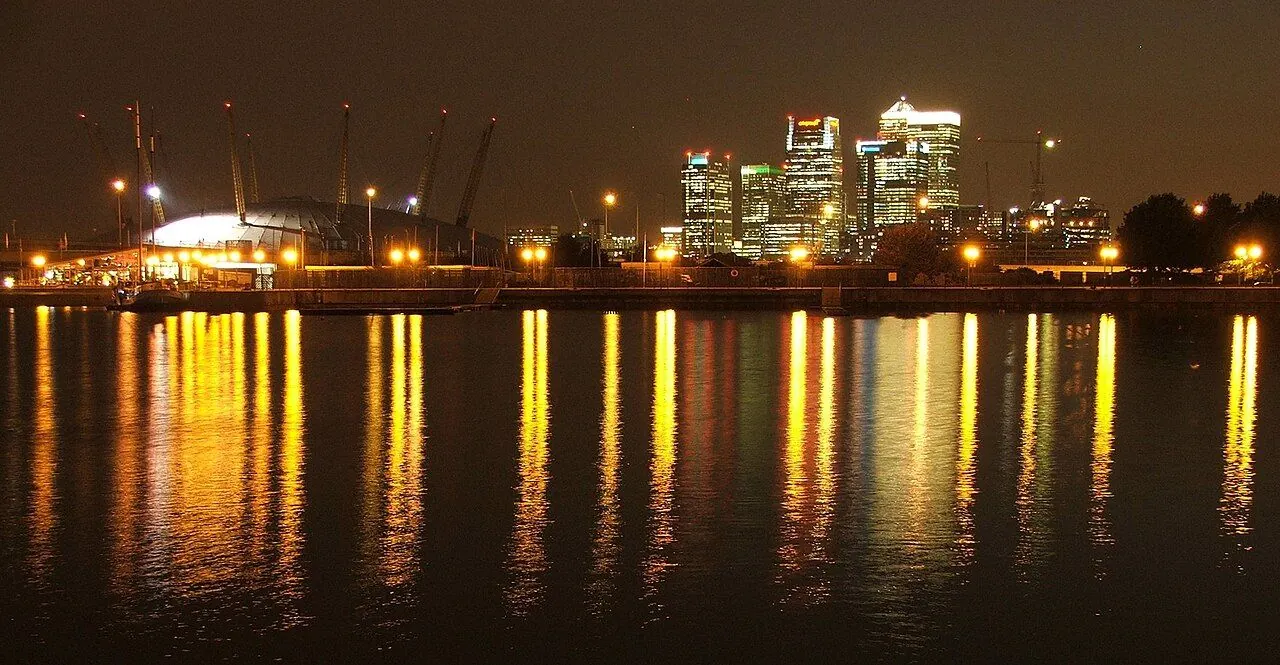
Pictured today: Photo: Michael Pead / Wikimedia Commons, CC BY-SA 2.0 uk
One January afternoon, a few years ago, I was in Prague, capital of the Czech republic. It’s a beautiful city, but it was late in the afternoon, the light had gone – and it was bitterly cold. In the central square, I looked around anxiously for somewhere I could go to warm up – and I spotted, with deep gratitude, the McDonalds. Having travelled hundreds of miles to the Czech Republic, I entered a restaurant which in every respect is exactly like the one in High Street North in East Ham.
But as you all know, this is not unusual. Now you can go to a McDonalds in New York, Nigeria, New Zealand and Newham. In 1955 the first McDonalds opened. Now a new McDonalds opens every 6 hours.
This is all part of the process of globalisation. As communications and technologies improve - and as companies become more competitive - the world is becoming a smaller place. Cultural distinctions remain, but foreign influences are being spread around the world like never before.
And as different influences mix we become more reliant on each other. The owner of a computer shop in East Ham becomes reliant on a programmer in Silicon Valley, California. The owner of a petrol station in Stratford is reliant on an oil worker in Kuwait. In today’s world, we depend on each other. We all have the duty to care for each other, because in caring for each other we are caring for ourselves.
Wars in distant parts of the world now affect everyone. We have to be concerned about conflicts in every corner of the globe.
The war in Afghanistan illustrates our interdependence in today's world. On September 11th the lives of over 3000 civilians were lost.
We had to make sure that such carnage would never be experienced again.
Firstly we tried to solve the problem through diplomatic means. That was unsuccessful. The military campaign though was successful, and as far as I can see people in Afghanistan are looking forward now immensely to prospects for a peaceful future, and to having British peacekeeping troops to help.
In Kosovo, we stood up to protect the innocent. We acted when Milosevic embarked on the ethnic cleansing of Muslims. The international community, led by Britain and Tony Blair, made a stand against Milosevic because we are not prepared for people to be persecuted in Europe because of their faith and ethnic origin.
We were also aware that instability in the Balkans leads to instability in Western Europe. Consider the First World War: the assassination of Archduke Franz Ferdinand in Sarajevo by a lone gunman sparked a war that would last five years, involve people from all across the globe, and result in the loss of millions of lives.
So, in caring for the people of Kosovo, we were also caring for ourselves. In the end Milosevic was defeated, the refugees went home, and the policies of ethnic cleansing were reversed. Milosevic now languishes in a prison cell at the Hague, on charges of crimes against humanity. He denied justice to his enemies. Now he is receiving his.
Britain has intervened to protect the innocent on many more occasions. We intervened in Sierra Leone when gangsters threatened the democratically elected Government. We have sought a peaceful solution in the Middle East, a solution allowing for Israelis and Palestinians to live together free from terror. Britain played a leading role in helping to shape the UN Security Council Resolution 1322, which called for a cessation of violence on both sides. Foreign Office ministers have had repeated meetings with Israeli and Palestinian leaders, including with President Arafat and Prime Minister Ariel Sharon, but a great deal of work remains.
But we haven’t always been so keen to seek peace. In Bosnia the previous Government did nothing in the face of unimaginable horrors. When a million people were slaughtered in cold blood in Rwanda eight years ago, we did nothing. In the Democratic Republic of the Congo, 3 million people have died in the last decade through war and famine, but sometimes we have done little or nothing to help. We can’t pretend that as a nation we’ve always done the right thing. Too often in the past we’ve acted solely in our own national interest, at the expense of those less fortunate than ourselves.
But if we are to create a peaceful world, we need to recognise that national safety and global reconstruction are inextricably linked. One cause of war is poverty. And for this reason, the Government is totally committed to a comprehensive package of international aid.
Globally there are 110 million children without schooling, 7 million avoidable child deaths each year and 1 billion of our citizens languish in poverty. During the 1990s a third of the children in the world suffered from malnutrition, and in sub-Saharan Africa the number of malnourished children actually increased. In 1999, the under-five mortality rate for low-income countries was 116 children per 1,000 born. In high-income countries only 5 of every 1,000 children died before the age of five. Life expectancy in sub-Saharan Africa is now 47. In high-income countries it's 78. From these figures it is clear that, if we are to create a harmonious world, we need a global fight against hunger, poverty, desperation and chaos.
The Government is committed to forming a new global alliance for prosperity that starts from the shared needs, common interests and linked destinies of developed and developing worlds working together. Because our interdependence means that what happens to the poorest citizen in the poorest country can directly affect the richest citizen in the richest country.
Since 1997, the Government has made progress in tackling world poverty. We have increased the aid budget by 45 percent in real terms, and by 2003/4 we will be spending £3.6 billion on aid. We have committed more than £500 million to support education, and we have allocated over £1 billion to improve healthcare for the poor. Last year, Gordon Brown cancelled the debts of the 41 most indebted countries, allowing them to spend the proceeds on the reduction of poverty. The Chancellor granted a tax-credit to encourage drug companies to increase research into AIDS, TB and malaria. We have also contributed £250 million on combating HIV/AIDS and promoting sexual and reproductive health. We have responded rapidly and effectively to humanitarian disasters, most recently in India, El Salvador, East Timor and Kosovo. Our investment has been significant: in absolute terms of cash spent, the UK was the fourth largest donor country in 2000 after Japan, the United States and Germany.
We have made a start, but we must continue. We ask that developing countries purse corruption-free policies for stability, for opening up trade and for creating a favourable environment for investment. In return we should be prepared to increase aid substantially. We are also committed to full trade liberalisation, which could lift hundreds of millions out of poverty. By removing barriers to trade, developing countries would gain an estimated $150 billion a year. In this case, free trade is fair trade.
I hope that in this brief talk I have illustrated how, in today's world we are all dependent on each other. Because of this interdependence we must care for each other if we are to care for ourselves. I see this new sense of community as the positive side of globalisation. The power of community can change the world because today we are forced to care for each other.
At present, billions of people are not free, whether because of war or poverty. It is because we are free that we must help those who are not free, so that one day they too will be free.
Thank you